If You Don’t Know Your Money, You Don’t Know Your Business – with Kate Toon (EP#52)
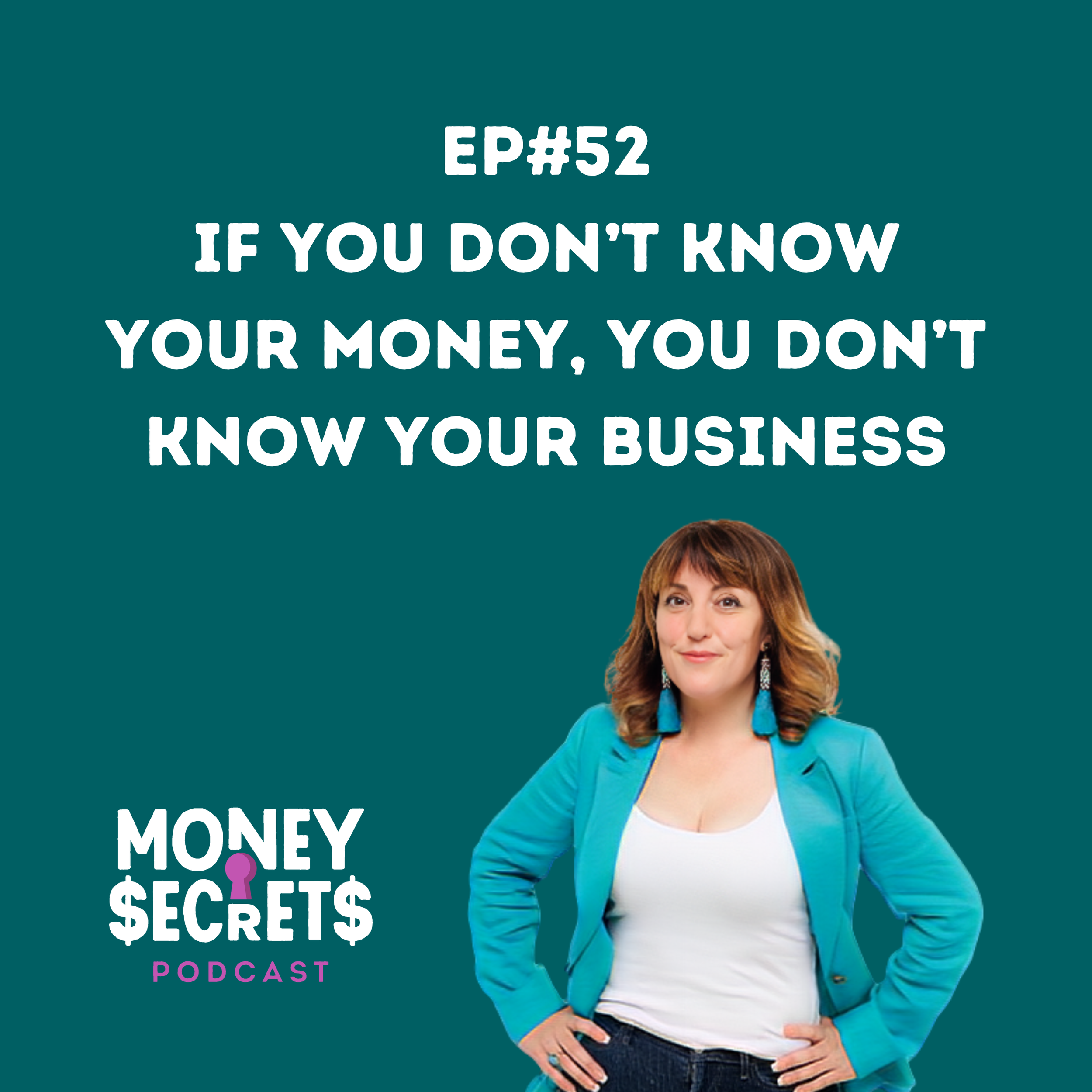
From tax debt and fear of being “eaten by cats” in retirement, to hitting seven figures and choosing to scale back for sanity and profit, Kate Toon shares the decisions, mistakes, and mindset shifts that have shaped her business over 16+ years.
In this episode of Money Secrets, Fi sits down with author, business mentor and digital marketing misfit Kate Toon for a funny, frank, and very real conversation about money, risk, and what success actually looks like over the long haul.
Listen to Episode 52
What You’ll Learn in This Episode
Know your numbers, know your business: Why Kate believes you should have a rough idea of every bank balance and key monthly expense at all times.
From tax debt to clarity: How a painful ATO bill and “end-of-year police” accountant experience pushed her toward Profit First, bookkeepers and daily money dates.
Revenue vs profit (and why seven figures isn’t the goal): What happened when Kate crossed $1M in revenue, and why she deliberately chose to earn less but keep more.
Minimal Viable Income: How working out “the least I can live on and still feel okay” can make pivots, experiments and downshifting feel safer.
Good debt vs bad debt (aka avocado debt): How Kate thinks about mortgages, investment and risk without sliding back into credit-card chaos.
Building assets, not just hours: The long game behind her SEO courses, memberships, books and shop, and why most people give up on digital products way too early.
Marketing stamina: Why following up more than twice, repeating your offers, and playing the long game matters when it can take years for someone to finally buy.
Financial independence after separation: What it took to buy out a partner, hold onto the house, and decide never to outsource money decisions again.
Success by ideal day, not by hype: How Kate now defines “enough” as low stress, reasonable profit, variety, and time to float in her beloved backyard pool.
If You Don’t Know Your Money, You Don’t Know Your Business – with Kate Toon
Money Secrets Podcast – Episode 52
Introduction
We've made a lot of progress as a society in many areas, but one thing that hasn’t changed enough is our relationship with money. If we want to tip the scales in favour of marginalised people, we need to understand the secrets to making money in small business.
The more we talk about money — especially the secrets that usually stay behind closed doors or on the golf course — the more empowered we become. My mission is to get more money into the hands of good people, specifically business owners like you.
Because I believe small business can change the world. And to do that, we need to be making more money.
Acknowledgement of Country
This episode was recorded on the lands of the Wurundjeri People of the Kulin Nation. I’d like to acknowledge them as the Traditional Owners and custodians of this land and water that I live, work and play on.
I pay my respects to Elders past and present, and recognise that sovereignty has never been ceded. This always was, and always will be, Aboriginal and Torres Strait Islander land.
Meet Kate Toon: Misfit, Mentor, Money Realist
If you’ve spent any time in the small business world, you’ve probably come across Kate Toon.
She describes herself as “a bit scruffy, sarcastic and not very conventional.” She’s never written a business plan, doesn’t care about fancy handbags, and is deeply suspicious of the “seven-figures-in-seven-minutes” online business hype.
And yet, she’s built an incredible body of work:
award-winning business mentor and digital marketing coach
long-time SEO educator and copywriting trainer
author, podcaster and speaker
owner of a bricks-and-mortar bookshop (!)
But underneath all of that is something much less glamorous and much more important:
Kate knows her numbers.
In this episode of Money Secrets, we talk honestly about what it takes to run a sustainable business on your own terms – and why, in Kate’s words, “if you don’t know your money, you don’t know nothing.”
“I Should Be Able to Ask You What’s in Your Bank Account”
Kate’s view on financial literacy is refreshingly blunt.
She believes every business owner should:
know roughly what’s in every bank account
understand how much they spend in key areas each month
be able to see, at a glance, whether things are actually working
Not perfectly. Not down to the cent. But enough that if someone asked, “How much do you usually spend on X each month?” you wouldn’t stare blankly into the void.
For Kate, avoiding the numbers isn’t cute, creative or bohemian.
It’s risky.
She’s lived the stress of tax debt (a $50K bill at one point), the fear of the card declining at the checkout, and the weight of being the primary breadwinner in her household.
Those experiences have shaped a simple rule:
Know your money daily.
Not once a quarter. Not when your BAS is due. Every. Single. Day.
Profit First, Xero and Getting on Top of the Numbers
Like many of us, Kate didn’t start out confident with money.
She began her business journey as a newly pregnant copywriter in 2009, leaving her ad agency job out of necessity and trying to earn “enough to keep the wolves from the door.”
Over time, she built a financial toolkit that works for her:
Xero as her home base (she’s in there more than her bookkeeper would like)
a Profit First–style structure, with money divided into different pots
a bookkeeper and accountant who act as partners, not just end-of-year police
She still tweaks things. She’s not “perfectly Profit First”, and she openly admits she thinks about money a lot – maybe more than is comfortable.
But the difference between early-Kate and current-Kate is this:
She’s no longer flying blind.
From Copywriter to Online Course Creator (and 32 Launches Later…)
Kate started, like many of us, with services: copywriting, then SEO copywriting.
By year three she was hitting capacity – working as many hours as she could, charging as much as felt reasonable, and still bumping up against the limits of a one-human business.
The shift came when she turned her SEO workshops into an online course.
It wasn’t glamorous at the start:
first round: 20 students
second round: 10
third round: even fewer
Most people would have called it a failed experiment and moved on.
Kate didn’t. She stuck with it, refined it, relaunched it… 32 times over 10 years.
That course – and the ecosystem around it – has since generated millions in revenue and become a core asset in her business.
Not because it was a “perfect” idea.
Not because she went viral.
But because she stayed.
Hitting Seven Figures – and Then Choosing Less
At one point, Kate’s business passed the magical million-dollar revenue mark.
She’d done the thing that the internet tells us we should all be striving for.
And then she made a very un-Instagram decision:
She chose to come back down.
Why?
Because the effort required to stay there wasn’t worth it.
On paper the business looked incredible. Behind the scenes, it was mostly Kate, a handful of contractors, and a very tired nervous system.
She realised that what she actually cared about wasn’t:
the revenue headline
the “seven-figure entrepreneur” badge
or being on stage with a shiny funnel diagram behind her
What she cared about was:
profit
time
feeling safe
and enjoying her work
So she deliberately reduced her revenue, simplified offers, and built a business that feels more sustainable – even if it looks less flashy from the outside.
Revenue, Profit and the “Minimal Viable Income”
One of my favourite concepts from our conversation is Kate’s idea of minimal viable income.
Instead of chasing an ever-expanding revenue goal, she asks:
“What’s the minimum I actually need to live the life I want – plus a little bit on top?”
For her, that looks like:
owning her home
modest-but-meaningful travel
daily coffee and avocado toast (non-negotiable)
a few simple luxuries (hello, swimming pool)
and the ability to say no to work that doesn’t feel good
From there, everything else is optional.
That doesn’t mean she’s anti-ambition. It means she’s pro-sanity.
Good Money Club
Are you a female or LGBTQIA+ business owner who wants to make more money and create meaningful change? My 6-month program, Good Money Club, is designed to help you do exactly that.
We work on your pricing, positioning, business model, and mindset — so you can build your bank account and your impact. Read more about Good Money Club.
Good Debt, Bad Debt… and Avocado Debt
Growing up, Kate was taught “never a borrower or a lender be” – which (predictably) led to credit cards and debt in early adulthood.
These days, she distinguishes between:
bad debt – credit card blowouts, tax debt, short-term overspending
good debt – mortgages, investments, “avocado debt” that builds long-term assets
She still hates the feeling of owing money she can’t pay back. That memory of a big tax bill and not enough in the account is strong enough that she’ll happily work extra hours to avoid going back there.
But she’s no longer anti-debt on principle.
She’s pro managed risk: using mortgages and investments to build long-term security, while fiercely avoiding the kind of debt that makes her stomach drop.
Financial Independence After Separation
One of the most powerful parts of our conversation was hearing how seriously Kate takes financial independence.
When she separated from her partner, she was able to:
use a director’s loan from her own company
buy him out of their home
and keep a solid footing for her and her son
That wasn’t luck.
That was years of paying attention.
She’s clear now: she will never give up that independence again.
Not because she’s bitter or anti-relationship, but because she’s seen too many people – especially women – come out of separation financially ruined.
Her stance is simple:
she doesn’t want to have to “ask permission” to spend
she wants to be the captain of her financial ship
and she’s willing to work hard to stay in that position
Risk, Naivety and Reinvention (Including a Bookshop by the Beach)
For someone who calls herself anxious and risk-averse, Kate takes some pretty big swings.
She’s:
launched conferences and retreats
written multiple books
and, in a move that would make most accountants twitch, bought a struggling local bookshop opposite the beach
She admits that if she fully understood how hard these projects would be, she’d probably never start.
Naivety, in her view, is a feature, not a bug.
You can hear the same energy in her advice to business owners:
say yes to things before you feel ready
trust that you’ll figure it out
be willing to reinvent yourself and your offers over time
The bookshop, by the way, is not a cash cow. Last year it turned over around $450K and made… basically no profit.
This year, it’s finally paying her a modest wage – around what a bookshop manager would earn.
It’s a love job, a lifestyle asset, and a live experiment in making bricks-and-mortar work on modern terms.
The Long Game: Marketing, Persistence and Wearing People Down (Lovingly)
If you’ve been around Kate for any length of time, you’ll know two things:
She’s prolific.
She’s been around a long time.
Her success with courses, memberships and digital products hasn’t come from a single viral launch. It’s come from:
showing up for years
improving the same offers again and again
and being willing to market something long after she’s bored of talking about it
She laughs that sometimes people only buy because they’re “so sick of seeing her face.”
Underneath the joke is a solid principle:
People take a long time to decide.
Your job is to still be there when they’re ready.
So, What Are the Money Secrets Here?
Here are the big takeaways I hope you absorb from this conversation with Kate:
Know your numbers daily.
Log in. Look around. Notice what’s changing. Don’t leave it to chance.Revenue is vanity; profit and peace are the point.
Seven figures are meaningless if you’re exhausted and paying yourself $60K.Clarify your minimal viable income.
What do you actually need to live the life you want? Start there.Use “avocado debt”, avoid “McDonald’s debt”.
Borrow for assets and long-term security, not for lifestyle creep.Protect your independence.
Especially for women and marginalised folks – financial safety is power.Stick with your good ideas longer than feels comfortable.
The magic often happens after round three, not round one.You don’t need a lofty mission statement.
Enjoying your work, helping people and building a stable life is more than enough.
Outro
Thank you for listening to Money Secrets. If you loved this episode, please subscribe, share it with a friend, or leave a review. Your support helps us get these conversations into the hands of more good people who deserve to thrive in business.
We’ve come so far as a society in many ways, but money is one of the areas where progress hasn’t been enough. If we want to tip the scales in favour of marginalised people, it starts with understanding the secret: money in small business.
In this podcast, Money Secrets, host Fiona (Fi) Johnston—Chartered Accountant, small business advocate, and impact enthusiast—dives into the conversations we need to have about money. The secrets that once stayed behind closed doors (or on the golf course) are finally out in the open.
Fi’s mission? To get more money into the hands of good people, like you. She believes small businesses have the power to change the world, and the key to making a bigger impact is to make—and manage—more money.
________________________________________________________________________
Thank you to everyone involved for bringing this podcast together. We are excited to hear from you with any questions, feedback or suggestions for future episodes that you might have. Send a Direct Message to @peach.business
If you are excited for what’s to come, please like this episode, follow the podcast and share it with your friends. We are thrilled you're here.
Want to find out more about Good Money Club? It's for female and non-binary business owners ready to make more money and impact. Join us?
Check out my FREE Pricing Training you need to set your prices for profitability.
________________________________________________________________________
This podcast episode was recorded on the lands of the Wurundjeri People of the Kulin Nation and I'd like to acknowledge them as the Traditional Owners and custodians of this land and water that I live, work and play on. I'd like to pay respect to elders both past and present, and note that sovereignty has never been ceded. This always was and always will be Aboriginal and Torres Strait Islander land.
Enjoyed this episode?
Subscribe to Money Secrets on your favourite platform so you never miss an insight:
If this episode helped you shift your thinking, I’d love it if you left a review — it helps more small business owners discover the show, and I read every single one.
Have questions or ideas for future episodes? Send me a DM over at @peach.business on Instagram. I’d love to hear from you.
Ready to take this work further?
Join the Good Money Club — my 6-month experience for business owners ready to earn more and make a bigger impact.