Not all debt is bad (EP#80)
Being scared of debt is holding small business owners back from making great financial investments that grow their business.
Understanding good and bad debt can save or make you lots of money.
Some debt can help you grow. Some involves risk. And some debt is a sign that your business is spending more money than it makes.
In this episode of Money Secrets, Fi Johnston breaks down the three different types of debt that can exist in a business.
Listen to Episode 80
What You’ll Learn in This Episode
The three different types of debt that can exist in your business
What makes debt “safe” and how to assess the return on an asset before borrowing
Using debt to fund business coaching, websites, and stock is a riskier middle ground
An unpaid credit card, line of credit or ATO debt = spending beyond your means.
If you have ATO debt, it's best to be proactive
Understanding how you got into debt is an important part of getting out of it
Making more frequent repayments reduces the interest you pay over time
Profit First is a great framework to help you aggressively pay down debt
What to do if your income isn’t enough to cover your expenses and debt payments
The ultimate goal isn’t becoming debt-free, it’s being consistently profitable.
Not all debt is bad (EP#80)
Introduction
We've made a lot of progress as a society in many areas, but one thing that hasn’t changed enough is our relationship with money. If we want to tip the scales in favour of marginalised people, we need to understand the secrets to making money in small business.
The more we talk about money — especially the secrets that usually stay behind closed doors or on the golf course — the more empowered we become. My mission is to get more money into the hands of good people, specifically business owners like you.
Because I believe small business can change the world. And to do that, we need to be making more money.
Acknowledgement of Country
This episode was recorded on the lands of the Wurundjeri People of the Kulin Nation. I’d like to acknowledge them as the Traditional Owners and custodians of this land and water that I live, work and play on.
I pay my respects to Elders past and present, and recognise that sovereignty has never been ceded. This always was, and always will be, Aboriginal and Torres Strait Islander land.
The Three Types of Business Debt and How to Deal With Them
Debt can feel like one of those big, scary business topics that we would rather avoid looking at too closely.
But not all debt is created equal.
Some debt can help you build assets, increase capacity and grow your business. Some involves a calculated risk that may or may not pay off. And then there is the kind of debt that slowly accumulates when a business is consistently spending more than it makes.
In this episode of Money Secrets, Fi breaks business debt into three categories and explains how to think about each one, from equipment loans and business investments to credit cards and ATO debt.
Most importantly, she explores what to do when debt has become a problem and how a Profit First approach can help you pay it down while changing the financial habits that created it in the first place.
Not All Business Debt Is Bad Debt
Seeing debt sitting on your balance sheet does not automatically mean something has gone wrong.
The more useful question is:
Why does the debt exist, and what did the business receive in return for taking it on?
Fi divides debt into three broad categories: safe debt, a middle ground of higher risk debt, and messy debt that has accumulated without a clear asset or investment sitting behind it.
Understanding which category your debt falls into can help you make much clearer decisions about what to do next.
Type One: Safe Debt
The first category is what Fi calls safe debt.
This is debt where there is a clear transaction and a tangible asset connected to the money you borrowed.
You might take out finance to purchase equipment that allows you to produce more efficiently. You might borrow money to purchase another business. Outside of business, a mortgage is another straightforward example.
There is something of value sitting on the other side of the debt.
The important calculation is whether that asset will make or save you enough money over its lifetime to justify the total cost of borrowing.
And remember, that cost isn't just the interest.
You still have to repay the principal.
So before taking on this type of debt, ask:
How much money will this asset make or save me, and how does that compare with everything I'll need to repay over the life of the loan?
Type Two: The Middle Ground
The second category is a little greyer.
This is debt attached to a specific investment, but the return is much less certain.
Maybe you put $10,000 of business coaching on a credit card because you believe the coaching will help you grow.
Perhaps you borrow money for a new website, hoping it will generate more customers.
Or maybe you finance a vehicle for the business.
In each case, you know exactly why you borrowed the money, but you cannot guarantee the return you'll receive from it.
That doesn't automatically make the decision wrong.
It does mean you need to understand the risk you're taking.
A $10,000 investment can mean something completely different to a business turning over $10 million than it does to a business making $100,000.
Context matters.
Look at the Real Cost of Borrowing
Vehicles are a great example of why looking beyond the monthly repayment matters.
You might purchase a car for $30,000, but while you're paying down the loan, the value of the car is also decreasing.
If you stretch the repayments across a longer period, the monthly cost may look more manageable, but you will generally pay more interest over the life of the loan.
So rather than asking only:
Can I afford this monthly repayment?
Look at the bigger picture.
What will the four year option cost in total? What about five, six or seven years? How much value will the thing you're buying still have by the time you've finished paying for it?
That gives you a much clearer view of the financial decision you're actually making.
Good Money Club
If this conversation resonated, you don’t have to figure it out alone.
Good Money Club is open right now.
Inside Good Money Club, women business owners:
Learn to understand and manage their own money
Build financial roadmaps
Develop sustainable pricing strategies
Get accountability and support
Increase revenue and take-home pay
Make bold, ethical money decisions
If you’re ready to:
Earn more
Pay yourself properly
Build a sustainable business
Reduce money stress
Close your own revenue gap
You can learn more about Good Money Club while doors are open.
Type Three: Messy Debt
Then we get to the debt Fi describes as the most dangerous.
This is the credit card with a $20,000 balance where you couldn't confidently explain what the $20,000 actually bought.
It's the line of credit built up across hundreds of transactions.
And it can also be ATO debt that continues accumulating because the business doesn't have enough money available when its tax obligations become due.
Unlike taking out a loan to buy a specific asset, there isn't necessarily one clear transaction sitting behind this debt.
Instead, it can be a sign of a deeper issue:
The business is spending more money than it is making.
That's the part that needs to be addressed if you want to stop the debt from continuing to grow.
What to Do If You Have ATO Debt
If you have ATO debt, Fi's advice is to be proactive rather than ignoring it.
Contact the ATO or speak to your accountant about contacting them on your behalf, and investigate whether a payment plan is available to you.
But there is an important catch.
While you're paying off what you already owe, your current tax obligations don't disappear.
So if you enter a payment plan, you need to consider whether your business can afford both the debt repayments and the new tax obligations that continue arising along the way.
Otherwise, you risk paying off old debt while simultaneously creating new debt.
Find Out How You Got Here
If you have credit card debt, a line of credit or another form of messy business debt, paying it down is only part of the solution.
You also need to understand how it happened.
Maybe you made an investment that didn't generate the return you expected.
Perhaps you spent heavily on advertising that didn't work.
Maybe a customer went bankrupt without paying a large invoice.
Or perhaps there wasn't one dramatic event at all. The business simply spent slightly more than it could afford, again and again, until that gap became debt.
Some circumstances are outside your control.
Others aren't.
The useful thing is to look at the situation objectively and ask:
How did I get here? What needs to change so it doesn't happen again? And how am I going to get myself out?
Stop Using Debt to Fund the Gap
If you're constantly putting expenses onto a credit card, paying some of it off and then putting more expenses straight back on, Fi suggests considering whether you need to stop using the card altogether.
Because if the credit limit starts feeling like money you have available to spend, it becomes incredibly easy to keep reaching the limit.
The goal isn't just to get the balance back to zero.
It's to create a business that can operate without needing the credit card to bridge the gap between what comes in and what goes out.
That means learning to spend within the business's actual means.
Use Profit First to Pay Down Business Debt
So how do you actually start clearing the debt?
Fi recommends using the Profit First system.
Think of it like the old envelope budgeting system, where income is divided into separate envelopes for different purposes.
In a business, those envelopes become separate bank accounts.
As money comes in, you allocate predetermined percentages towards things like people, operating expenses, tax and profit.
The crucial difference when you're carrying significant debt is what happens to your profit allocation.
For now, that profit has a job:
Pay down the debt.
Make Regular Payments
Fi gives a simple example.
Imagine your business expects to bring in $100,000 over the next year and you've allocated 10% of your income to profit.
That's $10,000 across the year that can be directed towards debt repayments.
Rather than waiting until the end of the year to make one big payment, Fi suggests transferring your allocations and paying down the debt regularly, ideally weekly if that's manageable for your business.
If you have $20,000 of debt and can consistently direct around $10,000 a year towards it, you now have the beginnings of a clear path out.
And once that debt is gone?
That profit allocation doesn't disappear.
Suddenly, the money you've trained yourself to set aside can begin accumulating as actual profit.
Do You Need to Spend Less or Make More?
There is another question worth asking when you're trying to get out of debt.
Is the problem that you're spending too much, or is your business simply not making enough money?
Sometimes the answer is reducing expenses.
But there is a limit to how much you can cut.
If your business genuinely cannot support its necessary expenses, tax obligations, owner pay and debt repayments at its current revenue level, then increasing revenue also needs to become part of the strategy.
Fi gives the example of a business earning $100,000 and putting 10% towards a $20,000 debt. Increasing revenue to $150,000 while maintaining that allocation could make a meaningful difference to how quickly the debt can be cleared.
Getting out of debt isn't always just an expense problem.
It can be a revenue problem too.
Final Thoughts
Debt isn't automatically good or bad.
What matters is why it exists, what you received in exchange for it, whether your business can comfortably afford it, and whether you have a clear plan for paying it back.
Safe debt can help you acquire an asset that creates long term value.
Higher risk debt can sometimes help you grow, but it needs to be taken on deliberately and with a clear understanding of what could happen if the investment doesn't deliver the return you expect.
And messy debt is a signal to look deeper at how money is moving through your business.
Because ultimately, clearing the balance is only one part of the work.
The bigger goal is building a profitable business that can live within its means so you don't find yourself creating the same debt all over again.
Outro
Thank you for listening to Money Secrets. If you loved this episode, please subscribe, share it with a friend, or leave a review. Your support helps us get these conversations into the hands of more good people who deserve to thrive in business.
We’ve come so far as a society in many ways, but money is one of the areas where progress hasn’t been enough. If we want to tip the scales in favour of marginalised people, it starts with understanding the secret: money in small business.
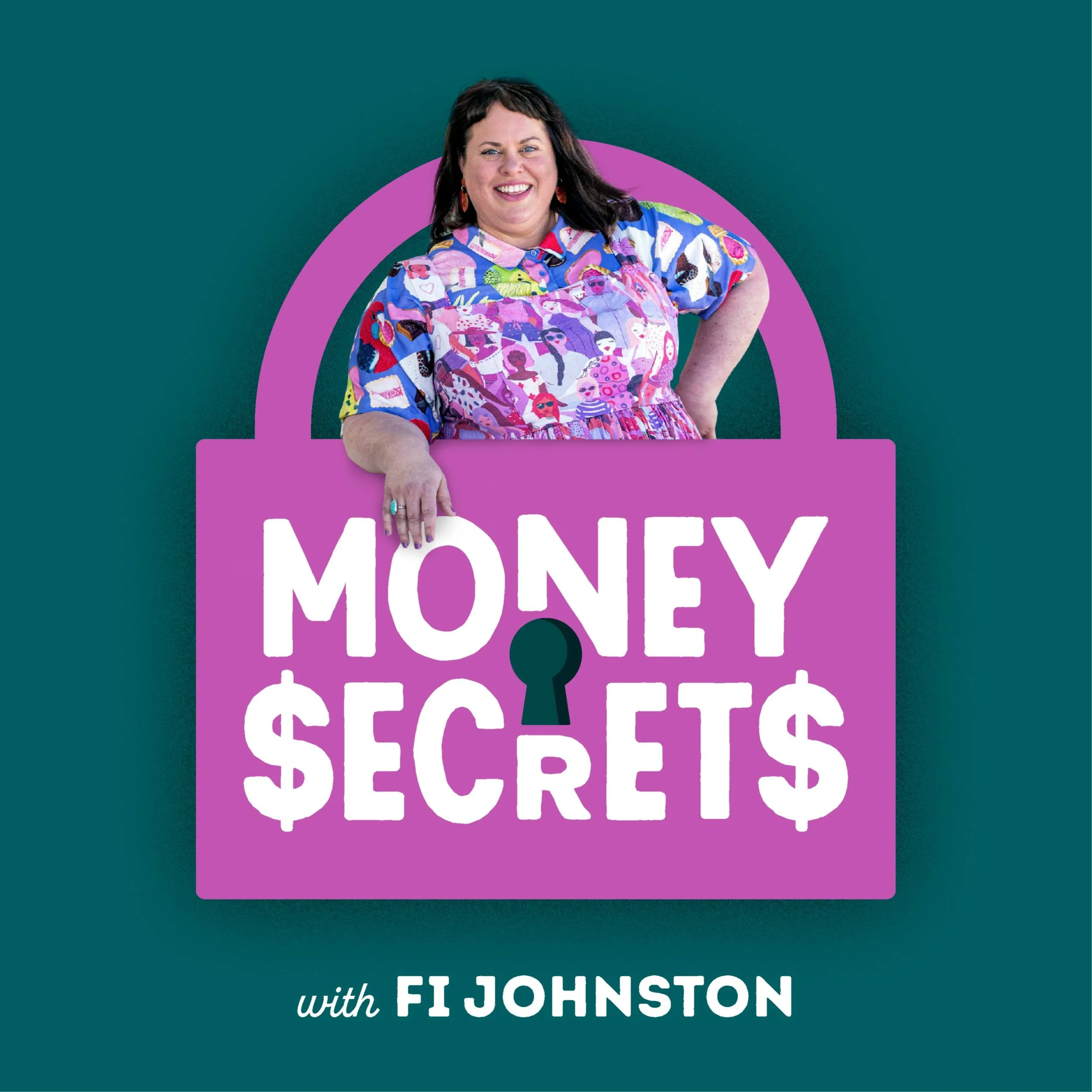
In this podcast, Money Secrets, host Fiona (Fi) Johnston—Chartered Accountant, small business advocate, and impact enthusiast—dives into the conversations we need to have about money. The secrets that once stayed behind closed doors (or on the golf course) are finally out in the open.
Fi’s mission? To get more money into the hands of good people, like you. She believes small businesses have the power to change the world, and the key to making a bigger impact is to make—and manage—more money.
________________________________________________________________________
Thank you to everyone involved for bringing this podcast together. We are excited to hear from you with any questions, feedback or suggestions for future episodes that you might have. Send a Direct Message to @peach.business
If you are excited for what’s to come, please like this episode, follow the podcast and share it with your friends. We are thrilled you're here.
Want to find out more about Good Money Club? It's for female and non-binary business owners ready to make more money and impact. Join us?
Check out my FREE Pricing Training you need to set your prices for profitability.
________________________________________________________________________
This podcast episode was recorded on the lands of the Wurundjeri People of the Kulin Nation and I'd like to acknowledge them as the Traditional Owners and custodians of this land and water that I live, work and play on. I'd like to pay respect to elders both past and present, and note that sovereignty has never been ceded. This always was and always will be Aboriginal and Torres Strait Islander land. Productivity and automation aren’t the answer
Enjoyed this episode?
Subscribe to Money Secrets on your favourite platform so you never miss an insight:
If this episode helped you shift your thinking, I’d love it if you left a review — it helps more small business owners discover the show, and I read every single one.
Have questions or ideas for future episodes? Send me a DM over at @peach.business on Instagram. I’d love to hear from you.
Ready to take this work further?
Join the Good Money Club — my 6-month experience for business owners ready to earn more and make a bigger impact.