From competing with businesses that charge less, to phasing out unprofitable services, finding the right price when you’re new in business and wondering whether to put your prices on your website, Fi answers the questions so many business owners wrestle with.
In this episode Fi opens up Auntie Fi’s advice line, answering questions recorded during the Q&A from her Make More Money Without Working Harder masterclass.
Listen to Episode 85
What You’ll Learn in This Episode
Being cheaper isn’t the answer. Show customers what makes your business different through your marketing, process and customer experience.
You can transition away from less profitable services. Build demand for premium services before gradually changing your existing offer and pricing.
Lower priced work can still have value. Early clients can give you experience and testimonials, but start charging appropriately as soon as possible.
Premium prices require your own marketing. Get clear on your ideal customer, where to find them and the outcome you create for them.
Your gut isn’t always telling you to say no. Sometimes discomfort around spending money is anxiety about doing something unfamiliar.
Bespoke quoting can make business harder. Productising your services into clear options can simplify selling for you and buying for your customers.
Putting prices on your website can improve your leads. You may get fewer discovery calls, but the people booking already know what to expect.
Your story can justify a premium position. Handmade, small batch or highly considered work gives customers meaningful reasons to choose your product.
Don’t discount yourself just to win the work. Build an offer and price that reflects the service you actually want to deliver.
Aunty Fi's Advice Line: Pricing, positioning and charging what you’re worth (EP#85)
Introduction
We've made a lot of progress as a society in many areas, but one thing that hasn’t changed enough is our relationship with money. If we want to tip the scales in favour of marginalised people, we need to understand the secrets to making money in small business.
The more we talk about money — especially the secrets that usually stay behind closed doors or on the golf course — the more empowered we become. My mission is to get more money into the hands of good people, specifically business owners like you.
Because I believe small business can change the world. And to do that, we need to be making more money.
Acknowledgement of Country
This episode was recorded on the lands of the Wurundjeri People of the Kulin Nation. I’d like to acknowledge them as the Traditional Owners and custodians of this land and water that I live, work and play on.
I pay my respects to Elders past and present, and recognise that sovereignty has never been ceded. This always was, and always will be, Aboriginal and Torres Strait Islander land.
Welcome to Auntie Fi's Advice Line.
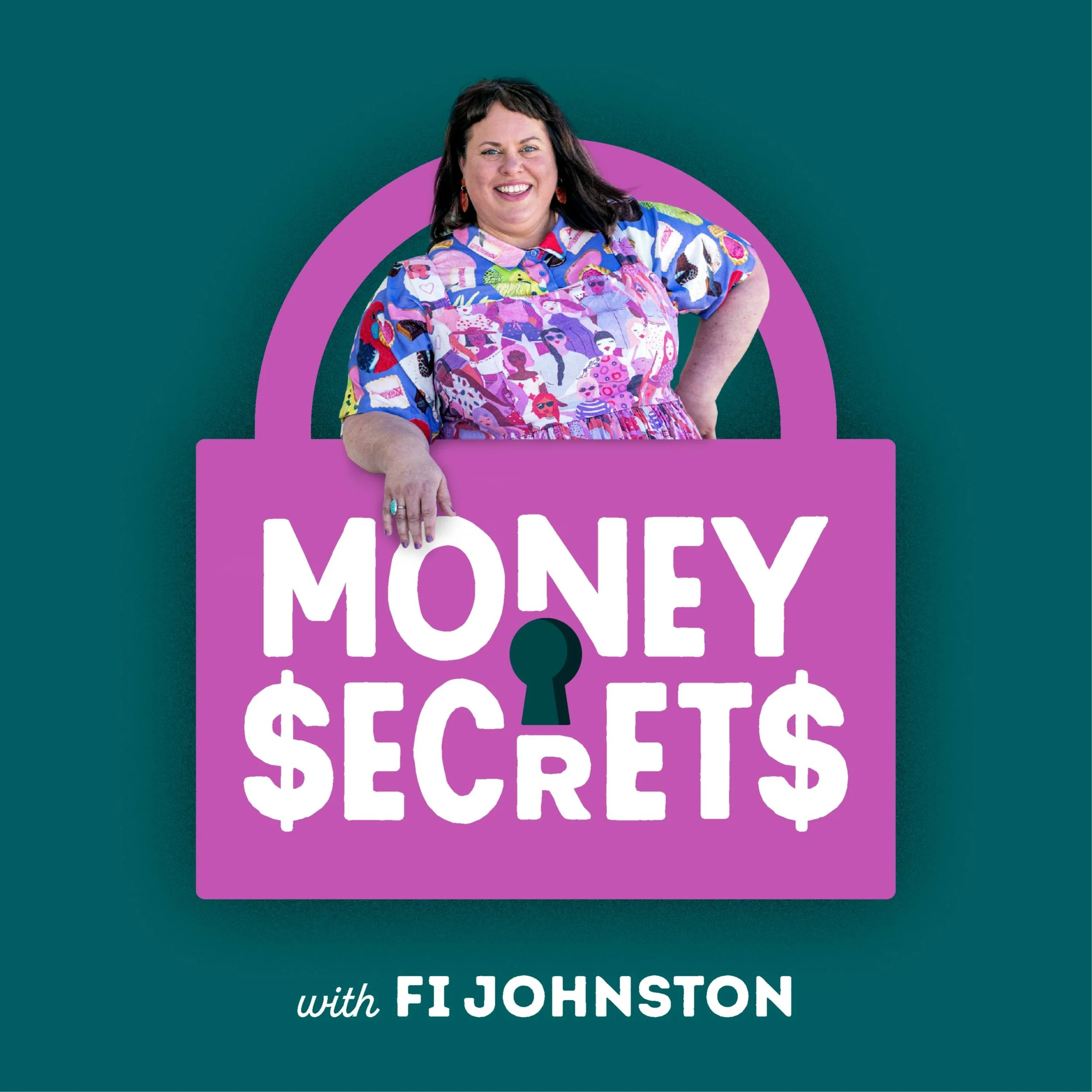
In this episode of Money Secrets, Fi Johnston shares a live Q&A from her Make More Money Without Working Harder masterclass.
And if you've ever questioned your pricing, second-guessed a proposal or wondered whether you're actually allowed to charge more, you're going to recognise yourself in these conversations.
From hairdressers and web developers to event professionals, life-admin specialists and hot sauce makers, small business owners bring their real questions to Fi.
The businesses are different.
The challenges? Surprisingly familiar.
Because making more money isn't always about finding more customers or doing more work.
Sometimes it's about recognising the value you're already creating and learning how to communicate it.
You Don't Have to Be Better. You Have to Be Different.
Let's start with a familiar frustration.
You're running a business.
You're delivering a great service.
You're putting time, expertise and care into your work.
And then someone comes along offering something that looks similar for half the price.
How are you supposed to compete with that?
One business owner working in the events industry asks Fi how to demonstrate value when competitors are consistently undercutting her prices.
Fi points out that some people entering the industry are running side hustles and aren't necessarily pricing their services to make a profit.
Which means you're sometimes competing against businesses that aren't even trying to make money sustainably.
So what do you do?
You stop trying to prove you're better and start showing why you're different.
Maybe it's your attention to detail.
Maybe it's your connections.
Maybe it's the customer experience.
Maybe it's the quality of your designs.
Or maybe it's everything that happens behind the scenes that customers never get to see.
Fi encourages business owners to show people how the sausage is made.
Take an event florist, for example.
Customers see the beautiful flowers at the wedding.
What they don't necessarily see is the planning, preparation, sourcing and creative expertise involved in making that happen.
If people don't understand what goes into your work, how can they understand its value?
Your marketing needs to help them see the difference.
What Happens When Your Most Popular Service Is Your Least Profitable?
Imagine being fully booked.
Customers love you.
Your reputation is strong.
And yet the work filling your calendar isn't actually making you much money.
That's the situation Gillian, a hairdresser with ten years in business, finds herself in.
She's preparing to move into a bigger salon and wants to start offering more premium services, including colour.
But there's a problem.
She's known for being brilliant at children's haircuts.
And children's haircuts are among her least profitable services.
So should she stop offering them?
Fi's advice is to make the transition gradually.
Because the last thing you want to do is cut off an existing revenue stream before you've built something to replace it.
Start marketing the services you want to become known for.
Attract customers looking for those services.
And as those bookings increase, gradually raise the prices of the work you're moving away from.
Some existing customers will happily pay more because they specifically want you.
Others might decide to go elsewhere.
And that's okay.
Gillian has already taken a clever step by switching off online bookings for new children's haircut clients while allowing existing customers to continue booking.
Fi loves the strategy.
Because it creates space for the kind of business Gillian wants to build next.
You don't always need to stop doing something. Sometimes you just need to change what you charge for it.
Your First Clients Don't Have to Be Your Forever Pricing Strategy
Starting a business can feel like a constant negotiation with yourself.
You want clients.
You want experience.
You want testimonials.
You want people to give you a chance.
And somewhere in that process, it's very easy to convince yourself that you should be charging less.
Chrissy has recently started a business called The Sidekick Effect, helping busy people with the life-admin tasks they don't have time to manage.
She's supporting people with things like moving house, decluttering and managing responsibilities around ageing parents.
Her goal is to make space for what matters.
But she's still figuring out what to charge.
Many of her early leads are coming through Airtasker, where customers often set the price.
So should she keep her prices low while building her reputation?
Fi acknowledges that there's value in taking on early clients.
Not necessarily because they're paying you well.
But because they can provide experience, testimonials and evidence that your service works.
However, there's a limit to how useful that strategy can be.
At some point, you need to start attracting customers who are willing to pay what your work is worth.
And Fi is clear that those customers are unlikely to come from platforms built around competing on price.
If you want to charge premium prices, you need to take control of your own marketing.
That means getting clear on who you want to work with.
Understanding what matters to them.
And explaining the outcome of working with you.
For Chrissy, that might mean focusing less on the tasks she completes and more on what those tasks make possible.
More time.
Less overwhelm.
A home that feels organised.
Space to spend time with family.
Because the real value isn't necessarily the hours spent doing the work.
It's what the customer gets back.
Stop Selling Yourself as Affordable
There's a word Fi would love more small business owners to stop using in their marketing.
Affordable.
Especially when you're trying to attract customers who value expertise, convenience or a premium experience.
If your marketing focuses on how reasonably priced you are, you're encouraging customers to evaluate you primarily on cost.
But what if your ideal customer isn't looking for the cheapest option?
What if they're looking for someone they can trust?
Someone who understands their needs?
Someone who will make their life easier?
Fi encourages Chrissy to think about the outcomes her customers actually want.
Not just what she does.
But why it matters.
Because someone who desperately needs more time in their day may value that time far more than the money they spend getting it back.
The question isn't just what do you sell? It's what becomes possible for someone when they buy it?
Good Money Club
If this conversation resonated, you don’t have to figure it out alone.
Good Money Club is open right now.
Inside Good Money Club, women business owners:
Learn to understand and manage their own money
Build financial roadmaps
Develop sustainable pricing strategies
Get accountability and support
Increase revenue and take-home pay
Make bold, ethical money decisions
If you’re ready to:
Earn more
Pay yourself properly
Build a sustainable business
Reduce money stress
Close your own revenue gap
You can learn more about Good Money Club while doors are open.
Should You Put Your Prices on Your Website?
Now for a question that might make a few service providers uncomfortable.
Should you publish your prices?
Or should you wait until you've had a discovery call, explained your value and created a custom proposal?
Anna, a web developer working with tradies, is wrestling with exactly this.
She's been creating bespoke proposals for potential clients.
And after sending one recently, she found herself wondering whether she should reduce the price by $2,000 just to win the business.
Even though doing so would bring her effective hourly rate down to around $50.
Sound familiar?
Fi's response is that while you can absolutely build a business around bespoke quoting, you're potentially making things much harder for yourself.
Instead, start with your ideal client.
What do they actually need?
Could you create a clearly defined service that delivers that outcome?
And could you offer three different options at three different price points?
Fi is a big fan of putting prices on your website.
Because it allows potential customers to understand what you offer before they book a discovery call.
You might get fewer calls.
But the calls you do get are more likely to be from people who are genuinely interested and can afford your services.
And if you've already packaged your offers, customers have a much easier decision to make.
Option one, two or three.
Rather than an entirely custom proposal every single time.
Less quoting.
Less second-guessing.
And fewer moments where you're tempted to knock thousands off your price because you really want the job.
Your Hot Sauce Isn't Just Hot Sauce
Sarah makes hot sauces and quick meals.
She sells them at farmers' markets.
She makes everything herself, at home.
And she's competing against businesses that have their products manufactured in factories.
Her prices are already higher than some of her competitors.
But she feels they should probably be higher again.
The problem?
She worries there's only so much people will pay for a jar of hot sauce.
Fi isn't convinced.
Because customers aren't necessarily just buying hot sauce.
They're buying a story.
A product made by a real person.
Something handmade rather than mass-produced.
A small business they want to support.
A particular flavour, experience or connection.
And all of those things can influence what someone is willing to pay.
Fi encourages Sarah to think about how she's communicating what makes her product different.
Is she telling the story behind it?
Does the packaging reflect the quality?
Is she making the handmade nature of the product part of her marketing?
And what happens when she talks to customers at markets?
Which stories resonate?
Which words make people interested?
Sometimes you don't need a completely new product or expensive new packaging.
You just need to get better at explaining why the product you already make is worth buying.
People connect with stories. Give them a reason to connect with yours.
Is It Your Gut Instinct or Is It Anxiety?
Not every money question is about pricing.
Sometimes the biggest challenge is what happens in your own head when you're about to spend money.
Natalie shares that she struggles to invest in herself and her professional development.
Even when an opportunity sounds amazing, her immediate reaction is that it isn't for her.
Fi encourages her to pay attention to the thoughts behind that reaction.
Because sometimes your gut is telling you something useful.
And sometimes what feels like gut instinct is actually anxiety.
Your brain is designed to keep you safe.
And unfamiliar decisions can feel threatening, even when they might be good for you.
That doesn't mean you should ignore your financial reality or say yes to everything.
But Fi encourages business owners to ask a different question:
What do I want to think about this?
Instead of automatically assuming something isn't for you, what would it feel like to trust yourself to make a good decision?
To believe you're capable of learning something new?
To consider what might become possible?
Fi describes trying on new thoughts like trying on a dress.
You don't have to immediately believe every thought.
But you can start noticing which ones are helping you move forward and which ones are keeping you stuck.
Charging Your Worth Isn't About Winning Every Job
There's a thread running through almost every question in this episode.
The fear of missing out.
Missing out on a client.
Missing out on a booking.
Missing out on a sale.
Missing out on an opportunity.
So we lower the price.
Take on work that isn't profitable.
Offer something we don't really want to offer anymore.
Or convince ourselves that being busy is better than risking an empty calendar.
But Fi's advice keeps bringing us back to the same idea.
The goal isn't to win every customer. It's to build a business that actually makes money.
That means understanding what you're selling.
Knowing who you're selling it to.
Communicating why it matters.
And being willing to make changes when the current approach isn't working.
Because a full calendar doesn't automatically mean a profitable business.
And a customer who chooses the cheapest option isn't necessarily the customer you need.
Final Thoughts
If you've ever thought about dropping your prices just to win a client, you're in very good company.
If you've struggled to explain why your service costs more than someone else's, you're not alone.
And if you've wondered whether you're ready to charge more, change your offers or invest in yourself, welcome to small business.
These are the questions business owners ask every day.
And there's no one-size-fits-all answer.
But there are some useful places to start.
Show people what makes your business different.
Make the work behind your product or service visible.
Build demand for the services you actually want to offer.
Use early clients to build experience and testimonials, but don't stay underpriced forever.
Talk about outcomes rather than affordability.
Make it easier for people to understand your offers and prices.
Tell the story behind what you create.
And pay attention to the thoughts influencing your money decisions.
Because making more money doesn't always require more work.
Sometimes it requires a different decision.
A clearer offer.
A stronger message.
A price that actually makes sense.
Or simply the confidence to stop talking yourself out of what your business is worth.
Outro
Thank you for listening to Money Secrets. If you loved this episode, please subscribe, share it with a friend, or leave a review. Your support helps us get these conversations into the hands of more good people who deserve to thrive in business.
We’ve come so far as a society in many ways, but money is one of the areas where progress hasn’t been enough. If we want to tip the scales in favour of marginalised people, it starts with understanding the secret: money in small business.
In this podcast, Money Secrets, host Fiona (Fi) Johnston—Chartered Accountant, small business advocate, and impact enthusiast—dives into the conversations we need to have about money. The secrets that once stayed behind closed doors (or on the golf course) are finally out in the open.
Fi’s mission? To get more money into the hands of good people, like you. She believes small businesses have the power to change the world, and the key to making a bigger impact is to make—and manage—more money.
________________________________________________________________________
Thank you to everyone involved for bringing this podcast together. We are excited to hear from you with any questions, feedback or suggestions for future episodes that you might have. Send a Direct Message to @peach.business
If you are excited for what’s to come, please like this episode, follow the podcast and share it with your friends. We are thrilled you're here.
Want to find out more about Good Money Club? It's for female and non-binary business owners ready to make more money and impact. Join us?
Check out my FREE Pricing Training you need to set your prices for profitability.
________________________________________________________________________
This podcast episode was recorded on the lands of the Wurundjeri People of the Kulin Nation and I'd like to acknowledge them as the Traditional Owners and custodians of this land and water that I live, work and play on. I'd like to pay respect to elders both past and present, and note that sovereignty has never been ceded. This always was and always will be Aboriginal and Torres Strait Islander land. Productivity and automation aren’t the answer
Enjoyed this episode?
Subscribe to Money Secrets on your favourite platform so you never miss an insight:
If this episode helped you shift your thinking, I’d love it if you left a review — it helps more small business owners discover the show, and I read every single one.
Have questions or ideas for future episodes? Send me a DM over at @peach.business on Instagram. I’d love to hear from you.
Ready to take this work further?
Join the Good Money Club — my 6-month experience for business owners ready to earn more and make a bigger impact.